Requirements and training program

Requirements for this profession include manual dexterity, a good sense of form and color, spatial awareness, good eyesight and hearing, the ability to perform patient, detailed work, and -last but not least- musicality.
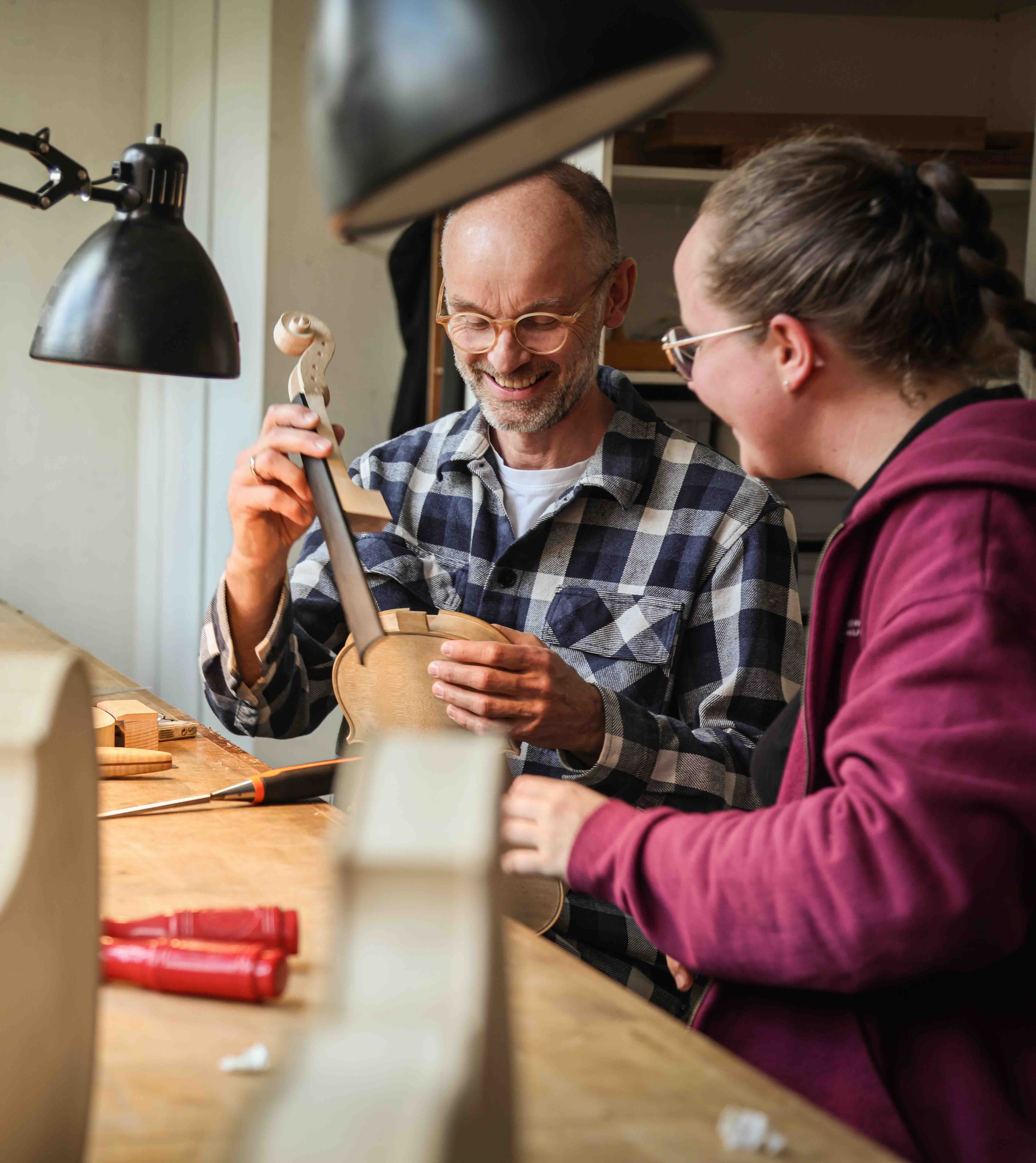
The apprenticeship as a violin maker is diverse and practice-oriented. A good two-thirds of the training period is dedicated to practical violin making, covering new construction, maintenance, and repairs.
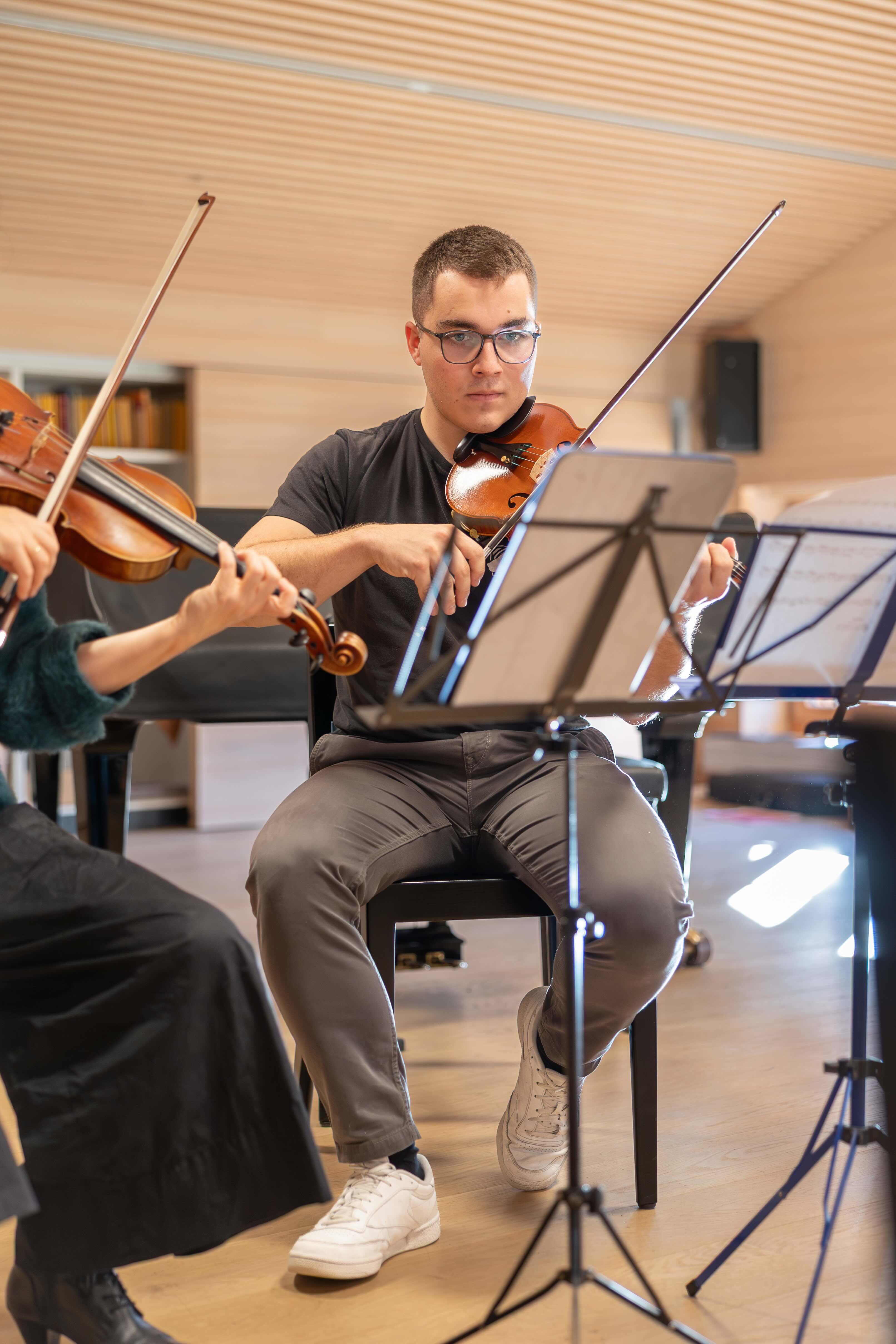
Practical training is supplemented by vocational classes covering scientific, historical, and cultural contexts. This also includes weekly instrumental lessons as well as chamber music and orchestral playing.
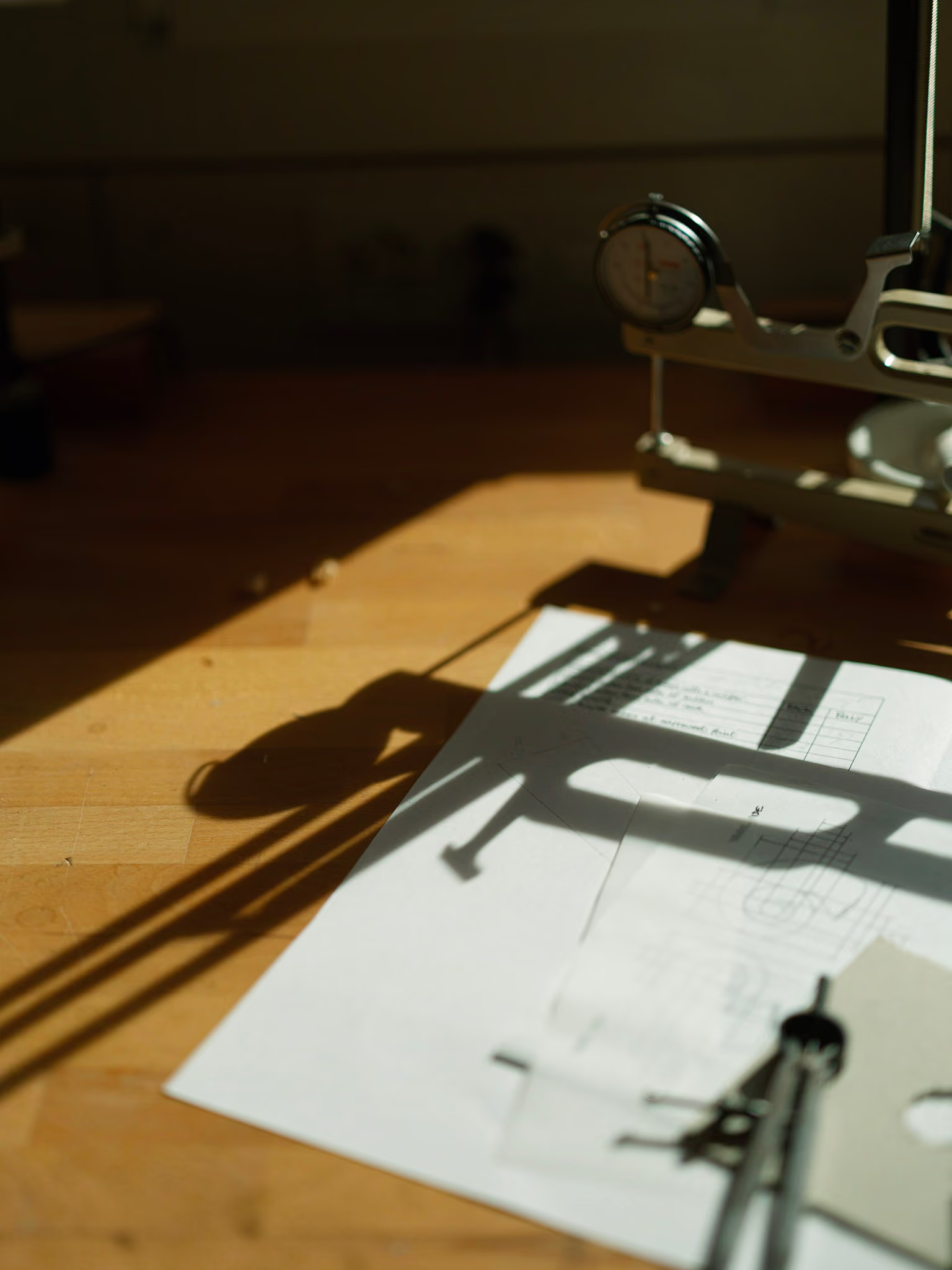
In inter-company courses, students learn tool making, the use of machinery, bow repair, and the fundamentals of photography. The focus of these course blocks is on restoration.
Apprentices who do not hold a high school diploma (Matura) or a completed initial vocational qualification attend general education classes.
The apprenticeship is supplemented by workshops, study trips, excursions, and concert visits.
Language skills:
For apprentices without German language skills, we expect them to acquire sufficient proficiency before starting their apprenticeship and during the first year to be able to follow the lessons. Until then, we are happy to assist in French or English.